Butter Substitutes: 6 Best Alternatives for Baking
The best substitute for butter is Coconut Oil at a 1 cup coconut oil per 1 cup butter ratio. It works best for cookies, pie crusts, quick breads. There are 5 other alternatives below, each with exact ratios and usage notes.
Best Substitute
Coconut Oil
1 cup coconut oil per 1 cup butter
Use refined coconut oil for a neutral flavor or virgin for a slight coconut taste. Works 1:1 and produces similar flakiness in pastry. Solid at room temperature like butter.
Flavor & Texture Change
Refined coconut oil is neutral. Virgin adds a noticeable coconut flavor. Texture in baked goods is slightly denser because coconut oil lacks butter's water content (no steam = less lift).
When Not to Use
Do not use virgin coconut oil in delicate vanilla or citrus baked goods. The coconut flavor will overpower. Won't brown like butter, so dishes relying on browned butter flavor will taste flat.
Which Butter Substitute Should You Use?
Best for Baking
Coconut Oil
Solid at room temp like butter, creates similar flakiness in cookies and pastry doughs.
Best Vegan Option
Vegan Butter
Drop-in 1:1 replacement that behaves identically to dairy butter in every application.
Best Budget Option
Applesauce
Extremely cheap, widely available, and halves the fat content. Best in moist baked goods.
Best for Cooking
Ghee
Higher smoke point than butter (482F vs 350F), won't burn when sauteing or pan-frying.
What are the other substitutes for butter?
Olive Oil
3/4 cup olive oil per 1 cup butter
Use 3/4 the amount since oil is 100% fat while butter is 80%. Use light/mild olive oil for baking. Changes the texture from flaky to more dense and moist.
Flavor/texture:Light olive oil is mostly neutral. Extra-virgin adds a mild fruity, slightly peppery flavor that works in savory baking but can taste off in sweet cookies or cakes.
Avoid when:Do not use in laminated doughs (croissants, puff pastry) or pie crusts. Liquid oil cannot create the flaky layers that require cold, solid fat. Also avoid extra-virgin in sweet recipes where its fruity flavor clashes.
Vegan Butter
1 cup vegan butter per 1 cup butter
The closest 1:1 substitute for butter in any application. Brands like Miyoko's and Earth Balance are designed to behave like dairy butter in baking and cooking.
Flavor/texture:Most brands taste very close to dairy butter. Some have a slightly salty or artificial undertone. Miyoko's and Naturli are closest to real butter flavor.
Avoid when:Some brands melt faster than dairy butter. If making pie crust, chill vegan butter extra-cold before cutting it into flour. Check labels for soy or palm oil if you have allergies or ethical concerns.
Ghee
3/4 cup ghee per 1 cup butter
Ghee is 100% fat vs butter at 80%. Use 25% less ghee. Adds nutty flavor.
Flavor/texture:Adds a rich, nutty, caramelized flavor that is more intensely 'buttery' than butter itself. Baked goods will have a toasted quality.
Avoid when:Not suitable if you need butter's water content (the 15% water in butter creates steam that helps leaven biscuits and puff pastry). Use 25% less ghee than butter since it is 100% fat.
Applesauce
1/2 cup applesauce per 1 cup butter
A low-fat swap for baking only. Use half the amount of butter called for. Keeps baked goods moist but will not create flakiness. Works best when combined with some fat.
Flavor/texture:Adds a faint apple sweetness. Texture becomes softer and more cake-like, less crispy. Baked goods can turn gummy if you use too much.
Avoid when:Do not use for pastries, pie crusts, frostings, or anything requiring structure from fat. Only works in moist baked goods like muffins, quick breads, and cakes. Never use as a full 1:1 swap; replace only half the butter.
Avocado
1 cup mashed avocado per 1 cup butter
Works 1:1 in baking. Adds healthy fats and moisture. Can tint baked goods slightly green. Best in chocolate recipes where the color is masked.
Flavor/texture:Very mild, slightly grassy flavor that disappears in chocolate recipes. Texture becomes denser and more fudgy, which is a plus in brownies but a minus in light cakes.
Avoid when:Can tint baked goods slightly green. Avoid in light-colored recipes like sugar cookies or vanilla cake. Best hidden in chocolate-based recipes.
What should you know before substituting butter?
When substituting butter, consider its three roles: fat (for richness and tenderness), water content (for steam and leavening), and milk solids (for browning and flavor). Oil-based substitutes provide fat but not steam. For flaky pastry, use solid fats like coconut oil or vegan butter, not liquid oils.
How do you substitute butter in a recipe?
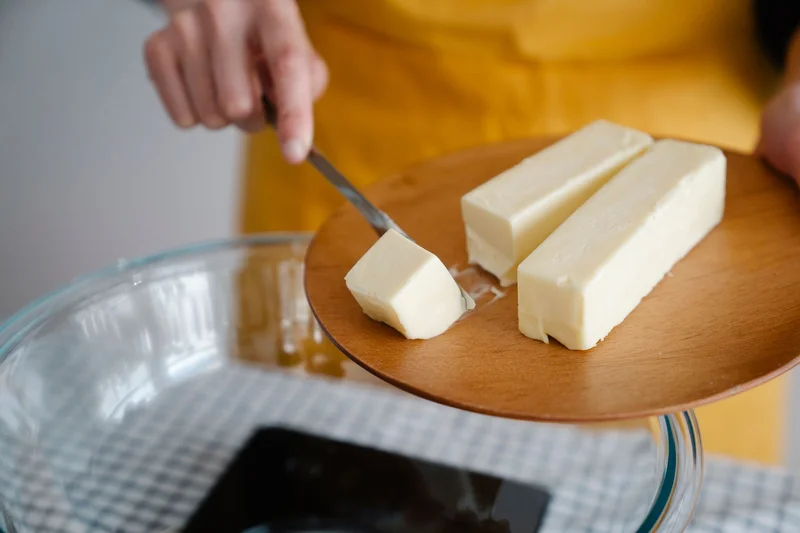
A dairy fat made from churned cream, used for flavor, moisture, tenderness, and flakiness in baking and cooking. Contains about 80% fat, 15% water, and 5% milk solids.
The best substitute for butter depends on what role it plays in your recipe. Our top recommendation is Coconut Oil (1 cup coconut oil per 1 cup butter), which works well for cookies, pie crusts, quick breads.
If you need a different option, Olive Oil (3/4 cup olive oil per 1 cup butter) is another reliable choice. Use 3/4 the amount since oil is 100% fat while butter is 80%. Use light/mild olive oil for baking. Changes the texture from flaky to more dense and moist.
When substituting butter, consider the flavor profile, texture, and cooking method of your recipe. For vegan alternatives, look for the options marked with the vegan badge above.
Substitution ratios verified against USDA FoodData Central and American Heart Association. See our testing methodology for details.
What can you use instead of butter in specific recipes?
Butter in Cookies
View recipe-specific substitutes →
Butter in Banana Bread
View recipe-specific substitutes →
Butter in Pie Crust
View recipe-specific substitutes →
Butter in Cake
View recipe-specific substitutes →
Butter in Frosting
View recipe-specific substitutes →
Butter in Brownies
View recipe-specific substitutes →
Butter in Muffins
View recipe-specific substitutes →
Butter in Crepes
View recipe-specific substitutes →
Butter in Donuts
View recipe-specific substitutes →
Butter in Cinnamon Rolls
View recipe-specific substitutes →
Butter in Replacing Oil in Baking
View recipe-specific substitutes →
Frequently Asked Questions
What is the best vegan substitute for butter?
Vegan butter (such as Miyoko's or Earth Balance) is the best 1:1 replacement. It works in all applications-baking, frostings, sautéing, and spreading. Coconut oil is the best whole-food alternative.
Can I use oil instead of butter in baking?
Yes. Use 3/4 cup of oil for every 1 cup of butter since oil is 100% fat while butter is about 80%. The texture will be moister and more dense rather than flaky. Use a mild-flavored oil.
How do I substitute butter for health reasons?
For lower fat, replace half the butter with applesauce. For healthier fats, use olive oil (3/4 cup per cup of butter) or mashed avocado (1:1). These swaps work best in cakes, muffins, and quick breads.